Batch stock in every godown
Stock by godown and van, with batch and expiry, so the oldest stock moves first.
- Godowns and vans
- Batch and expiry
- Reorder levels
FMCG distribution Distributors and super stockists
FMCG distributors and super stockists run beats, van sales, schemes, batch stock and collections in one system. Every outlet visit, order and rupee collected lands in BeatOS ERP the moment it happens.
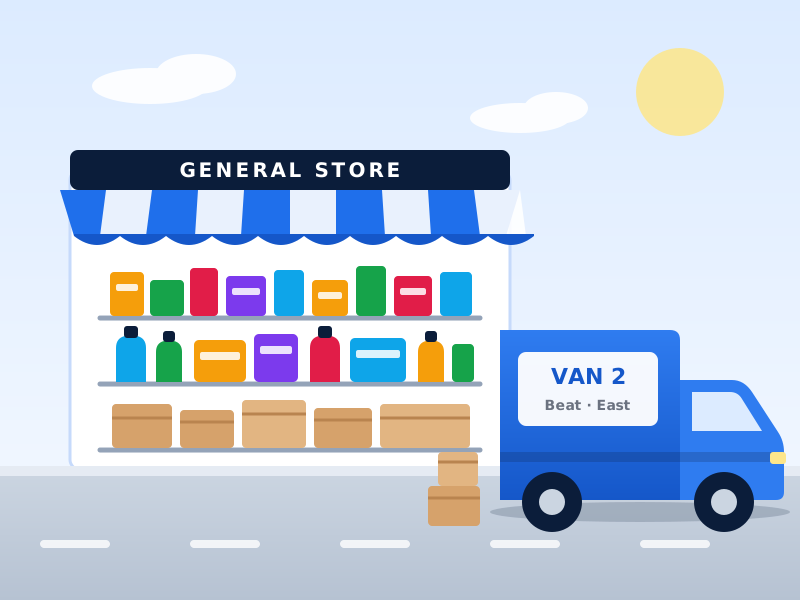
BeatOS ERP for FMCG distributors
The godown, the vans, the salesmen and accounts work on the same batches, price lists, schemes and credit limits.
Stock by godown and van, with batch and expiry, so the oldest stock moves first.
Outlet-wise price lists, schemes and discounts applied on every order and invoice.
Purchase orders to the brand, goods received by batch, and bills matched to what arrived.
GST invoices with e-way bills, credit limits per outlet, and receivables by salesman.
A working day
Click a step to see what the salesman sees in the BeatOS app.
The apps
Most start with attendance, beats and invoicing, then add collections, targets and expenses.
Outlet coverage
Every outlet sits on a beat with a visit day. Area managers see which beats are covered and which outlets have not been billed this week.
Schemes and claims
The salesman never works out a scheme by hand, and the claim to the company is built from the invoices that earned it.
Buy-X-get-Y, quantity slabs and value discounts applied automatically as the order is made.
Schemes start and end on their dates, by item, brand, outlet group or territory.
Scheme claims prepared from the invoices that earned them, with the free goods given and the discount passed on.
What each scheme sold, by outlet and salesman, so you know which ones are worth running again.
Godown and van stock
Each van is its own stock location, so what was loaded, sold and brought back always adds up.
The day's stock moves from the godown to the van, by batch.
Invoices on the spot, from the stock actually on the van.
Unsold stock and outlet returns go back to the godown.
Loaded, sold and returned are matched, with cash and UPI handed over.
Collections and credit
The salesman sees what an outlet owes before taking the next order, and the office sees every rupee collected on the beat the same day.
FAQ
Yes. Each van is a stock location. Stock is loaded from the godown in the morning, invoiced at the outlet from what is on the van, unloaded in the evening and reconciled the same day.
Schemes such as buy-X-get-Y, quantity slabs and value discounts are set up in BeatOS ERP with their dates, and applied automatically when the order or invoice is made. Claims to the company are prepared from the invoices that earned them.
Yes. Sales to outlets are reported by outlet, beat, salesman, brand and item, from the same invoices accounts use.
Yes. Check-ins, visits and orders are saved on the phone and sent when the network returns, with their real time and place.
Yes. Stock is kept batch-wise with expiry dates in every godown and van, and damaged or expired returns come back against credit notes.
Other industries
See your outlets, salesmen and schemes running in BeatOS.